

What is a Learning Lab?
Learning Labs are a hands-on and full-day class format, designed to address current topics and new approaches in technology management. Lab content changes quarter-to-quarter but all Learning Labs are focused on structured, fast-paced “learning by doing” in small groups, with the goal to build new skills. They are open to all PSU graduate students, regardless of previous skills or experience. All Learning Labs explore AI applications for technology management.
The Learning Lab format was created by Drs. Antonie Jetter and Ameeta Agrawal.
Fall 2024 – Learning Lab #4

LLMs for Invention Review and Customer Discovery
In collaboration with PSU’s Office for Innovation and Intellectual Property
Taught by Travis Woodland, Arsh Haque, and Dr. Antonie Jetter
This Learning Lab explored the ways that many of us will likely use Large Language Models in the near future: embedded in other, off-the-shelf products and almost invisible to the user. Participants worked with Perplexity.ai and First Ignite, both commercial AI tools. In collaboration with PSU’s Office for Innovation and Intellectual Property, participants used these tools to work on real-world technology transfer projects and evaluate the market potential, IP position, and next steps of PSU-generated intellectual property.
The course was targeted to students in Engineering and Technology Management, Business, Computer Science, Engineering, and Sciences, who are interested in what it takes to turn scientific and engineering insights into products and services with real-world impacts.

Spring 2024 – Learning Lab #3
Large Language Models for Creating Chatbots
Taught by Dr. Antonie Jetter
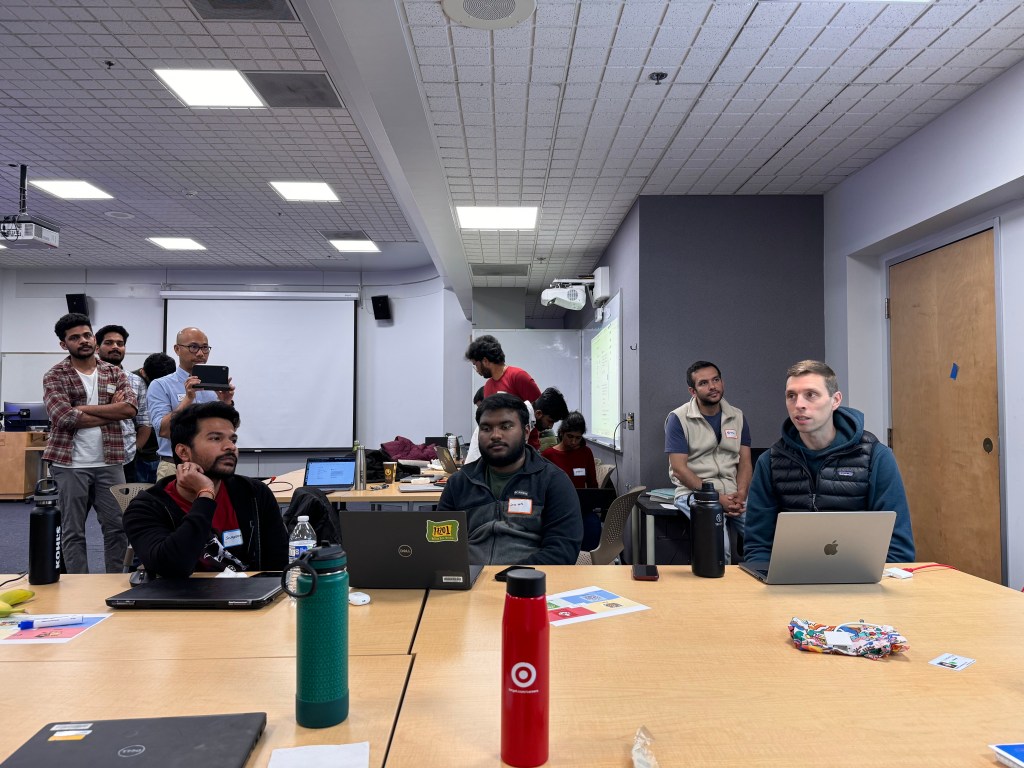
This term, Learning Lab participants used a Large Language Model Chat GPT and an off-the-shelf product to build a real-world application—a chatbot. We used student-defined projects to explore practical problems when using LLMs in a business setting, such as alignment and reliability.
In teams, participants defined the output of their chatbot including three main types:
- Mainly information output: Building a tutor/coach on a topic of interest (and where you can judge the quality of responses).
- Mainly information gathering: Building a virtual interviewer/researcher to collect information in places where we would usually expect a human conversation partner, e.g. customer research, understanding student experiences, opinions about a specific technology.
- Mainly two-way exchange: Building a Job Interview Coach for specific (real-world) job opportunities and interview styles (behavioral interviewing) that students can use to practice.
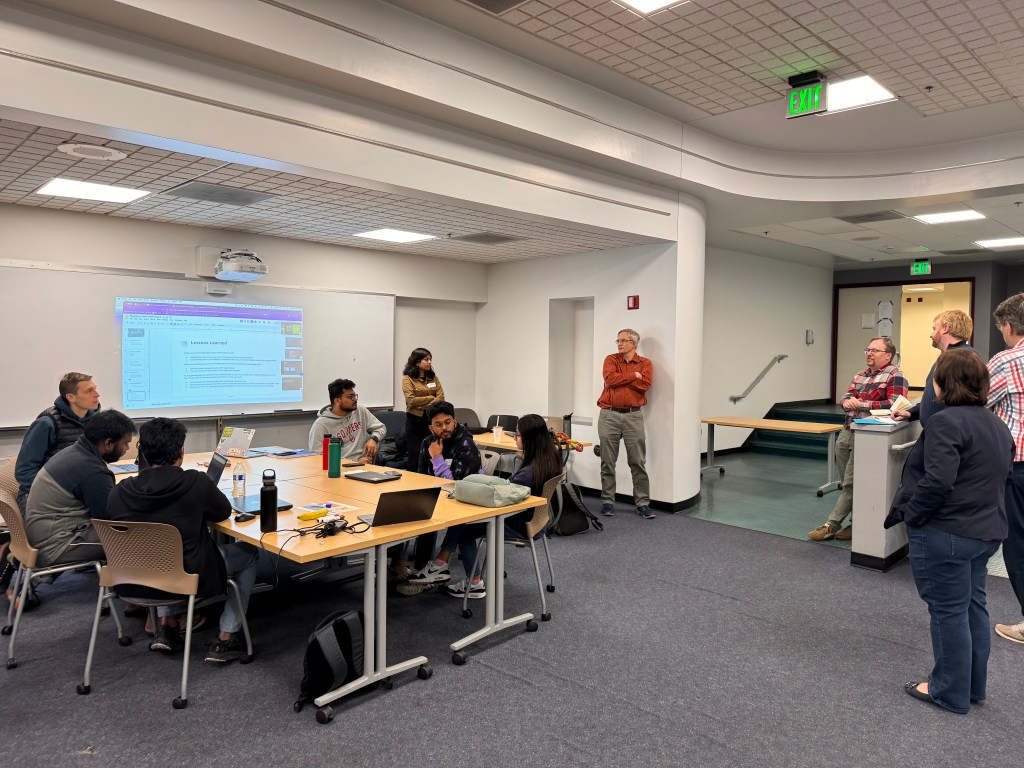
In this Lab, participants:
- Defined the goal, as well as desired and undesired behaviors.
- Created the knowledge base for the chatbot.
- Tested and refined the chatbot’s output.
- Prepared and gave a presentation on what they learned.
Winter 2024 – Learning Lab #2

Large Language Models for Data Analysis
Taught by Dr. Antonie Jetter
Did you know that Large Language Models can be used to support data analysis? They are particularly capable with language tasks, but they can also help with quantitative analysis. We explored existing and emerging capabilities and limitations by working with real-world datasets.
This hands-on course explored the potential uses, challenges, and limitations of Large Language Models for supporting qualitative and quantitative data analysis. For example, GPT can help clean datasets, categorize and code free text responses, and support your quantitative analysis. After all, “GPT” stands for “general purpose technology.”

In this Lab, participants:
- Worked in teams to innovate and market a new product.
- Discovered and used Large Language Models while putting together their projects.
- Presented their resulting projects to Lab participants, tutors, and an outside expert, Vera Sell of Clearsight Marketing.
Fall 2023 – Learning Lab #1

Large Language Models for Product Innovation
Taught by Dr. Antonie Jetter with assistance from Dr. Ameeta Agrawal and doctoral candidate Dahm Hongchai.
This hands-on course explored the potential uses, challenges, and limitations of Large Language Models for identifying product opportunities, analyzing market data, and developing product ideas.

In this Lab, participants:
- Worked in teams to explore and analyze different data sets.
- Discovered and used Large Language Models to complete their projects.
- Presented their projects to participants, tutors, and outside stakeholders who were interested in the data being analyzed.
 Compassionate Computing